


Your people at the center of your incentive programs.
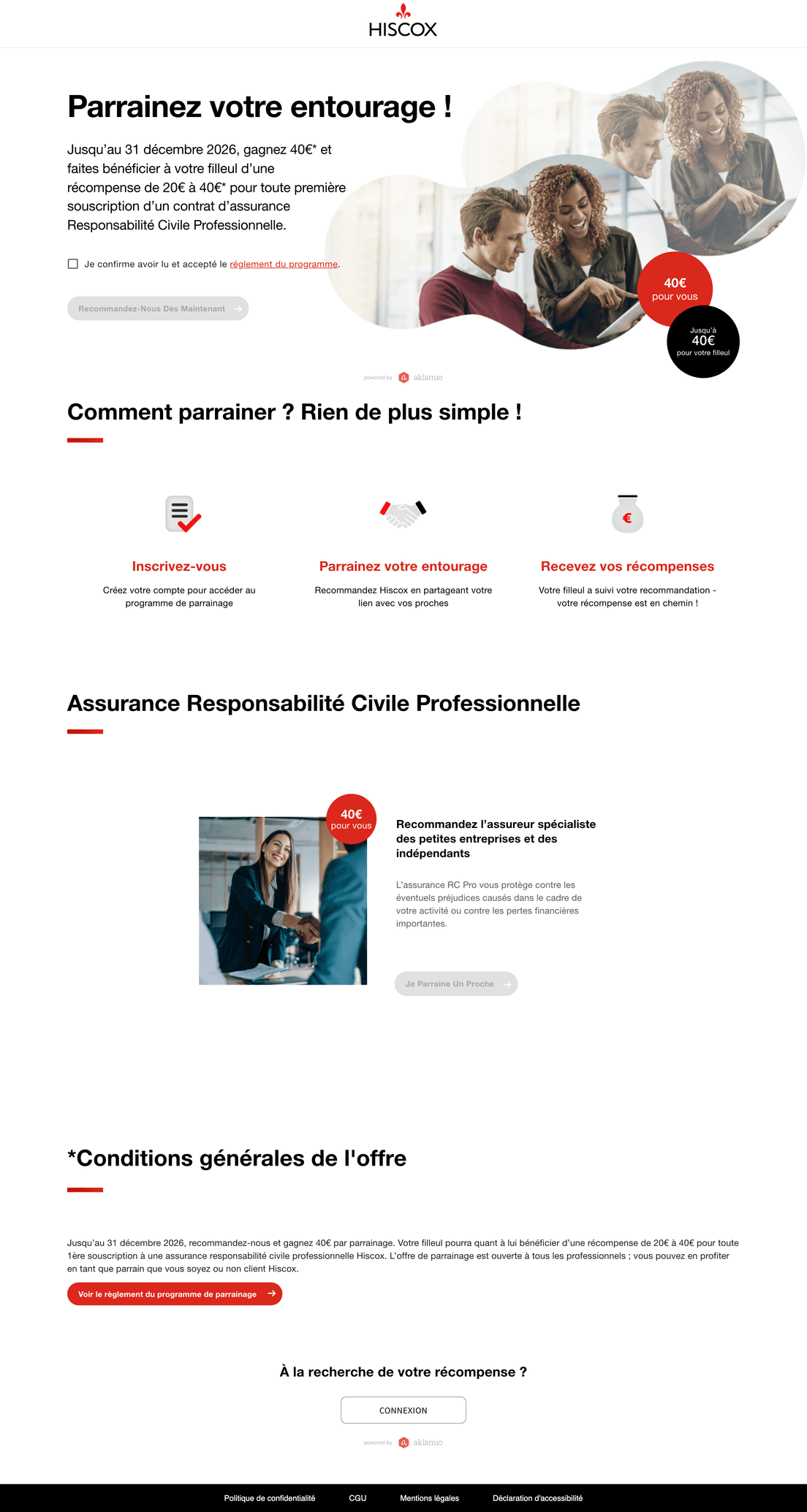
Manage call center, shop, door-to-door and broker networks: assign offers, track agent-driven conversions, control access.
Industries · Insurance
Insurance is a category where the broker drives most of the high-value book and the policyholder rarely thinks about the brand. Aklamio activates broker and tied-agent channels, drives direct policy acquisition through referrals and wins lapsed customers back, on one fraud-controlled ledger.
30+
implementations
800k+
policies activated
50
markets
2 to 4 wk
time-to-live
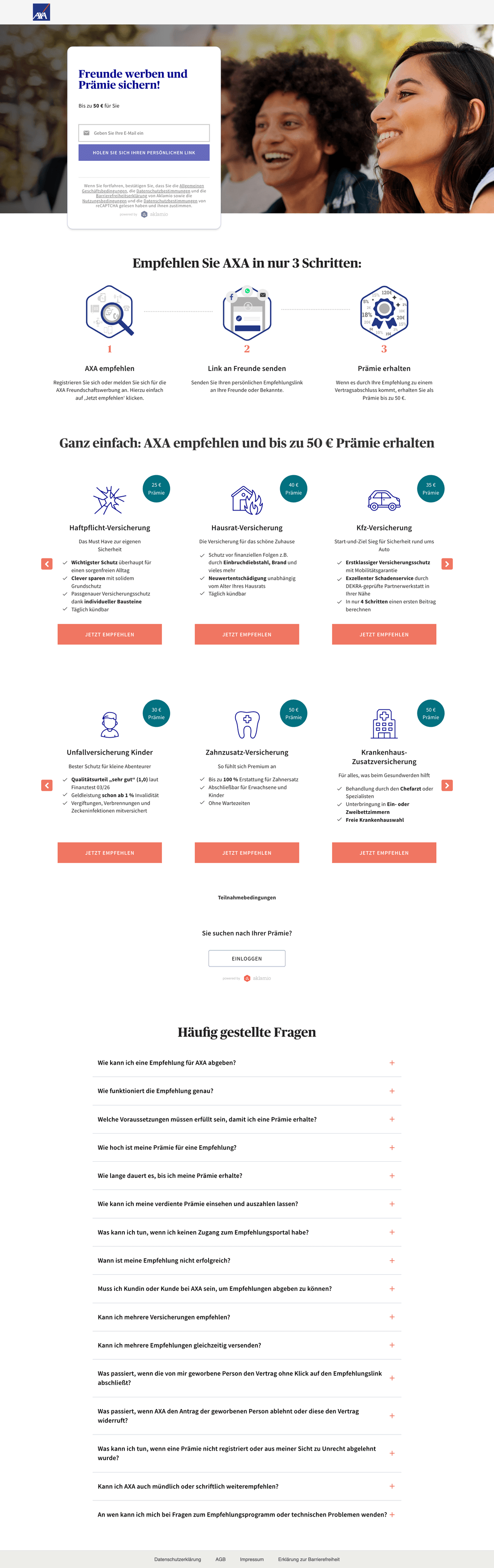
AXA
Trusted by the leading insurers
Direct online sales and broker channels, disengaged policyholders and high demands on trust and compliance shape insurance. Aklamio starts right there: incentive programs lift online sales, strengthen broker and agent channels, get policyholders moving and pass every audit.
The combination insurance brands run most often, all on the same platform: one integration, one ledger, fraud-controlled by default, programs you can add, pause or recombine as the market demands.
Every insurance program runs on the same platform and the same managed service. These are the parts that do the work.
Manage call center, shop, door-to-door and broker networks: assign offers, track agent-driven conversions, control access.
Fraud detection and operations run as part of the managed service, protecting the program without adding work for your team.

Your customers experience your brand, start to finish. Our infrastructure does the heavy lifting behind the scenes.
We answer customer questions about rewards, eligibility and payouts, so your support team doesn’t have to. One of the highest-rated in our category on Trustpilot.

Configure time-bound campaigns on a running program: boosted rewards, seasonal or themed offers, all without engineering.
API connectors that embed the platform into your stack for automation and full data access.
When a payout looks suspicious, Aklamio runs an identity check on the recipient. Payouts to frequent earners can include VAT or 1099 reporting, so high-volume advocates are paid correctly.
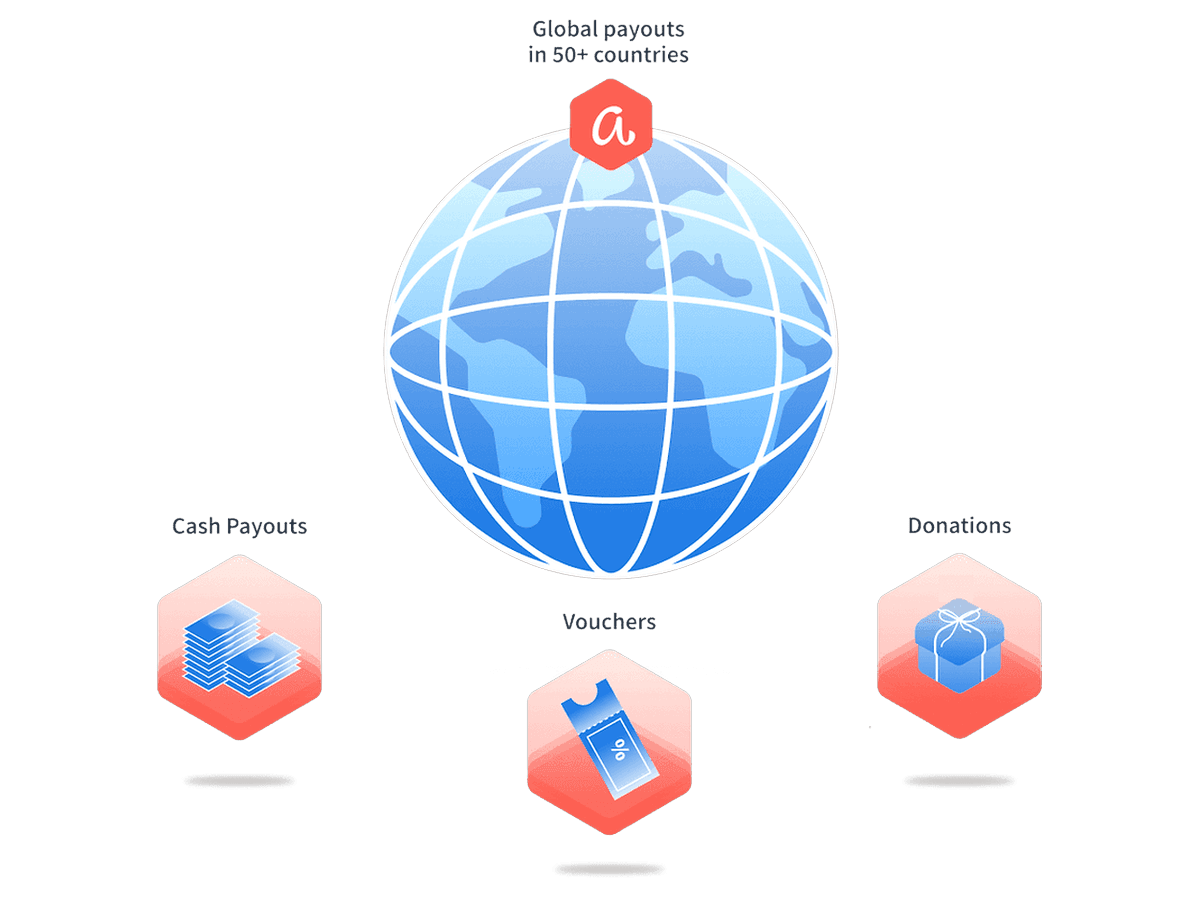
Incentivize across web, app, call center, POS, door-to-door and partners. One implementation across all your sales channels.
Compliance and fraud prevention are handled by the platform, not handed back to your team.
Straight answers on brokers, cooling-off periods and the evidence a compliance team asks for.
Book a DemoYes. A program can run through your online channel and through brokers, tied agents and aggregators at the same time. With refer-a-friend that is often the case: customers recommend online, and brokers pass the same reward offer on to the customers they advise. It works the same way for other incentive programs, such as sales promotions or winback. Brokers get access per brokerage and per individual, and every reward is attributed to the channel and the person who introduced the policy. So you see both channels side by side in one report. The brokers' commission arrangements stay untouched, because the reward goes to the policyholder.
Because the reward goes to the customer rather than to the intermediary, it sits outside the commission arrangement your compliance team already governs, which is the reason most insurers run it this way. Programs can still be limited to specific products, capped per period, or restricted to non-advised introductions where that is the requirement. We also take care of fraud by brokers: every introduction is attributed to the person who submitted it, and our operations team reviews unusual patterns before any reward is paid out.
As always, rewards are only paid out once every reward criterion you set has been met. Usually that means once the policy can no longer be cancelled. Until then the reward shows as pending to the recipient. Your systems report cancellations via API or CSV upload, and a cancellation voids the reward before any money moves. So you never pay rewards for policies that do not last.
Yes, and in insurance that is usually the point. The offer moves with the renewal season, a competitor's price change or a push on one product line. A campaign is a time-bound layer on a program that is already running. A boosted reward, a seasonal offer or a product-specific push is configured by your team rather than built. The underlying program, its rules, its broker access and its reporting stay exactly as they were, and campaign results can be analyzed separately, so you can see what a push actually moved.
Access is managed per brokerage and per individual, so an office can be onboarded, suspended or removed without touching the rest of the network, and every reward traces to the person who introduced the policy. Fraud controls run on top of that: device and identity signals, velocity checks and duplicate detection on every introduction. Per-agent reporting makes a network outlier visible rather than something you find at audit.